
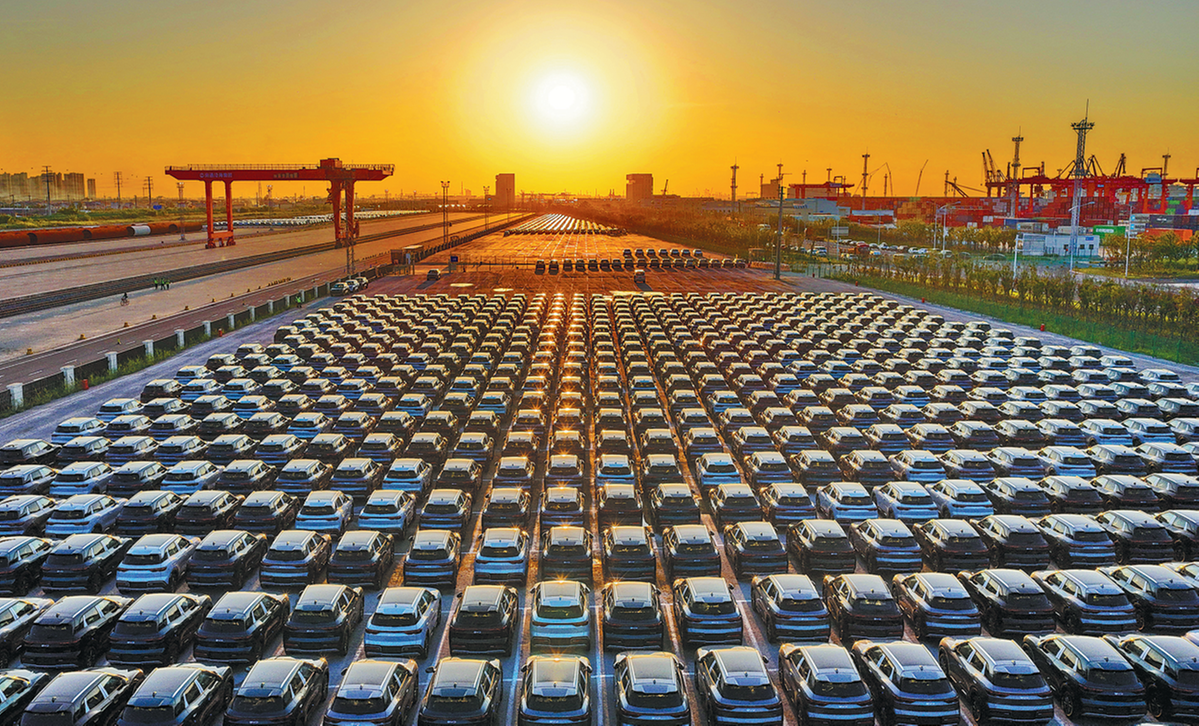
 New energy vehicles are prepared to be shipped overseas at a logistics base in Nantong, Jiangsu province, in May. XU CONGJUN/XINHUA
Facing the impact of the European Union's Carbon Border Adjustment Mechanism (CBAM), officials from 16 developing nations gathered in Central China recently to study how to build domestic carbon markets from scratch. The two-week workshop at Wuhan University highlights Beijing's growing push to export its regulatory blueprint across the Global South as emerging economies scramble to decarbonize their heavy industries and protect export revenues.
Held from Sept 10 to 21, the Seminar on the Progress of China's Carbon Market Development and Cross-border Carbon Trading Cooperation was hosted by Wuhan University as part of China's South-South climate cooperation capacity-building program. It covered carbon market design, monitoring, reporting and verification (MRV), carbon asset management and cross-border trading, and included visits to low-carbon projects and companies in Wuhan, capital of Hubei province.
Qi Shaozhou, director of the Research Center for Climate Change and Energy Economics at Wuhan University, said rising participation in such programs reflects a growing recognition among developing countries that carbon pricing can help reduce greenhouse gas emissions and support industrial and energy transitions.
Their willingness to study in China also demonstrates trust in the country's experience, he said. China has developed the world's largest emissions trading system. It started with seven regional pilots in areas with different levels of economic development, industrial structures, energy mixes and technological capacities. "That diversity can offer different developing countries a range of experience and inspiration," Qi said.
The participants arrived with questions shaped by their own national circumstances. Amar Kaddouri of Morocco's Ministry of Economy and Finance said at the opening ceremony that "climate change is no longer a distant threat, but a real challenge that all of us must face".
Morocco has also had to prepare for the CBAM, which affects its industrial exports. About 60 percent of the country's exports go to European markets, according to Kaddouri. He hoped to compare Chinese and European approaches in search of solutions relevant to Morocco.
CBAM, which took effect on Jan 1, puts a carbon price on certain carbon-intensive imports.
Such concerns explain why China's experience attracts attention beyond the size of its market, and what matters to countries still building carbon pricing systems is not only what China has achieved, but also how it sequenced reforms, dealt with weak foundations and corrected problems along the way.
Zhang Xiliang, chairman of the carbon emissions trading committee of the Chinese Society for Environmental Sciences, said at the China-Southeast Asia Carbon Markets Forum in Wuhan in September that gradual development was one of the clearest lessons.
"If it is difficult to launch a market nationwide, a country can start with local pilots and accumulate experience," he said. China followed its regional experiments by launching its national emissions trading system in 2021 with the power generation sector alone, before expanding coverage to steel, cement and aluminum smelting.
Starting locally can help build agreement among government departments and demonstrate to senior decision-makers that a carbon market is workable, Zhang said. Beginning with one major sector also gives regulators time to build capacity before adding industries with different emissions profiles.
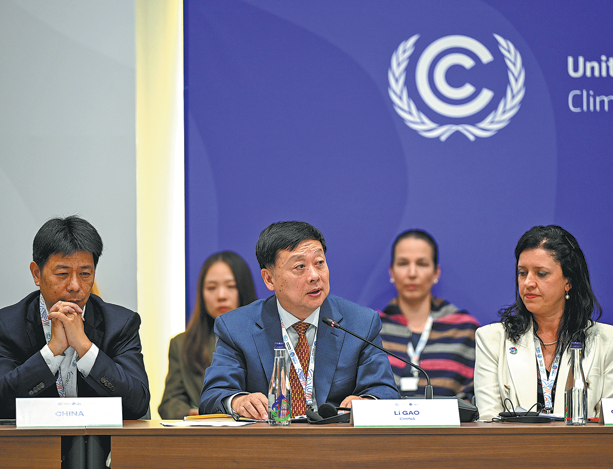
Li Gao (center), vice-minister of ecology and environment, speaks as co-chair of the Open Coalition on Compliance Carbon Markets at COP31 in Antalya, Turkiye, on Nov 16. LIU LEI/XINHUA
China's national market covered 3,378 key emitters in the four sectors in 2025. At that scale, sound emissions data are indispensable to a credible carbon price.
For Zhang Xin, deputy director of the National Center for Climate Change Strategy and International Cooperation, the development of China's MRV system contains some of its most useful experience, precisely because the process was difficult.
"The construction of the MRV system was indeed extremely challenging," he told the China-Southeast Asia forum.
When work began more than a decade ago, technical guidelines issued by regulators lacked a strong legal foundation, he said. Many companies had yet to recognize carbon emissions management as an important part of their operations, and their capacity to collect and manage carbon data varied widely.
Another problem emerged as different authorities developed technical guidelines and national standards. Requirements did not always align on parameters, accounting boundaries, data collection methods and verification.
"At the beginning, everyone was enthusiastic and pushed the work forward from their own perspective," Zhang Xin said. "In the end, we found that the technical rules needed to be properly coordinated."
The challenge became greater as the national market expanded. When it covered only power generation, regulators had to screen more than 3 million data records a year, he said. After steel, cement and aluminum smelting were added, the amount rose to roughly 5 million to 7 million records.
China gradually strengthened the legal basis for emissions data management and introduced penalties for violations. It shifted oversight from annual verification toward monthly submission and review of key data, tightened metering requirements, strengthened supervision of verification bodies and revised technical guidelines when implementation exposed shortcomings.
A national digital platform is used to screen data from thousands of key emitters, identify abnormalities and preserve supporting records. It is intended to make information traceable and annual emissions reporting more efficient.
Capacity-building also began before trading. Zhang Xin noted that China started large-scale training on data quality management in 2019, two years before the national market began online trading.
The message is that a trading platform is only the visible part of a carbon market. Underneath it are laws, standards, trained personnel, measuring equipment, verification arrangements and coordination among government agencies.
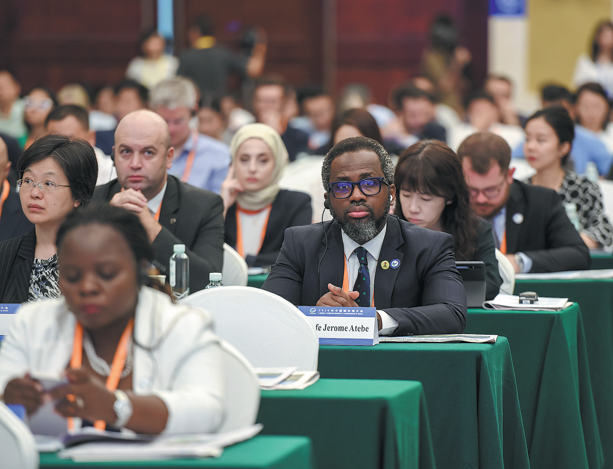
Attendees listen to a speech during the China Carbon Market Conference 2026 in Wuhan, Hubei province, on Sept 15. LIU ZHONGCAN/FOR CHINA DAILY
The questions raised by Wei-nee Chen, head of the carbon market at Bursa Malaysia, showed how specific that demand for knowledge has become. Malaysia is no longer asking whether carbon pricing is necessary. It is working out how different instruments should fit together and connect with international markets.
Malaysia launched its National Carbon Market Policy in April, covering voluntary and compliance markets and participation under Article 6 of the landmark 2015 Paris Agreement. Its latest nationally determined contribution moved from an emissions-intensity target to an absolute reduction target. Chen said the country was also preparing climate legislation and a carbon tax.
Article 6 of the treaty enables international cooperation to tackle climate change and to unlock financial support for developing countries. Its Article 6.4, for example, establishes a new mechanism which can be used to trade high-quality carbon credits.
At the Wuhan forum, Chen listed what Malaysia hopes to learn from China. One of them, for instance, is what policy, regulatory and market design decisions have allowed China to progressively expand its national system while balancing emissions reduction, economic competitiveness and market liquidity.
She also raised questions about what standards Chinese buyers might apply to carbon credits from Southeast Asia and how markets could become more interoperable without weakening environmental integrity.
Her questions point to a wider regional agenda. Developing countries need credible domestic systems, but also want to know whether their credits will be recognized abroad, and how Article 6 transactions should be authorized.
For countries at an earlier stage, China's long process can offer reassurance as well as technical guidance. Balisi Justice Gopolang, an official with Botswana's Ministry of Environment and Tourism, said his country had yet to develop a carbon market framework. He planned to report to his government on the need for legislation, institutional arrangements and resources, and to encourage the inclusion of climate change and carbon markets in Botswana's five-year planning cycles.
His priority was to establish the policy and legal framework before moving step by step toward a trading system and stronger MRV arrangements. China's experience, he said, showed that a country could begin with limited foundations and gradually build a functioning system.
The Wuhan seminar attempted to extend that learning beyond the classroom. Its mentorship program paired participants with Chinese experts to maintain communication after they returned home. In the final session, country teams used lessons from the course to design carbon market or carbon tax proposals suited to their own circumstances and received comments from instructors and other participants.
Carbon markets share common principles, but their design must reflect national development stages, administrative capacities, industrial structures and policy priorities. The value of China's path lies less in offering a blueprint to copy than in showing how experimentation, sequencing and revision can turn an idea into an operating market.
At the closing ceremony, Karin Costa Vazquez, an official with the Extraordinary Secretariat for the Carbon Market under Brazil's Ministry of Finance, said participants had arrived in Wuhan carrying "an invisible suitcase" filled with their cultures, histories, values and ways of seeing the world.
"International cooperation is not about eliminating our differences," she said. "It is about having the curiosity to understand them, the generosity to listen, and the humility to recognize that our own perspective is only one among many."
Markets, regulations and technologies ultimately depend on people, she added. For the officials and researchers who came to Wuhan seeking ways to put a price on carbon, one of the seminar's most important results may therefore be something that cannot be measured in tons of CO2: a network they can draw on as they begin building systems of their own.

