
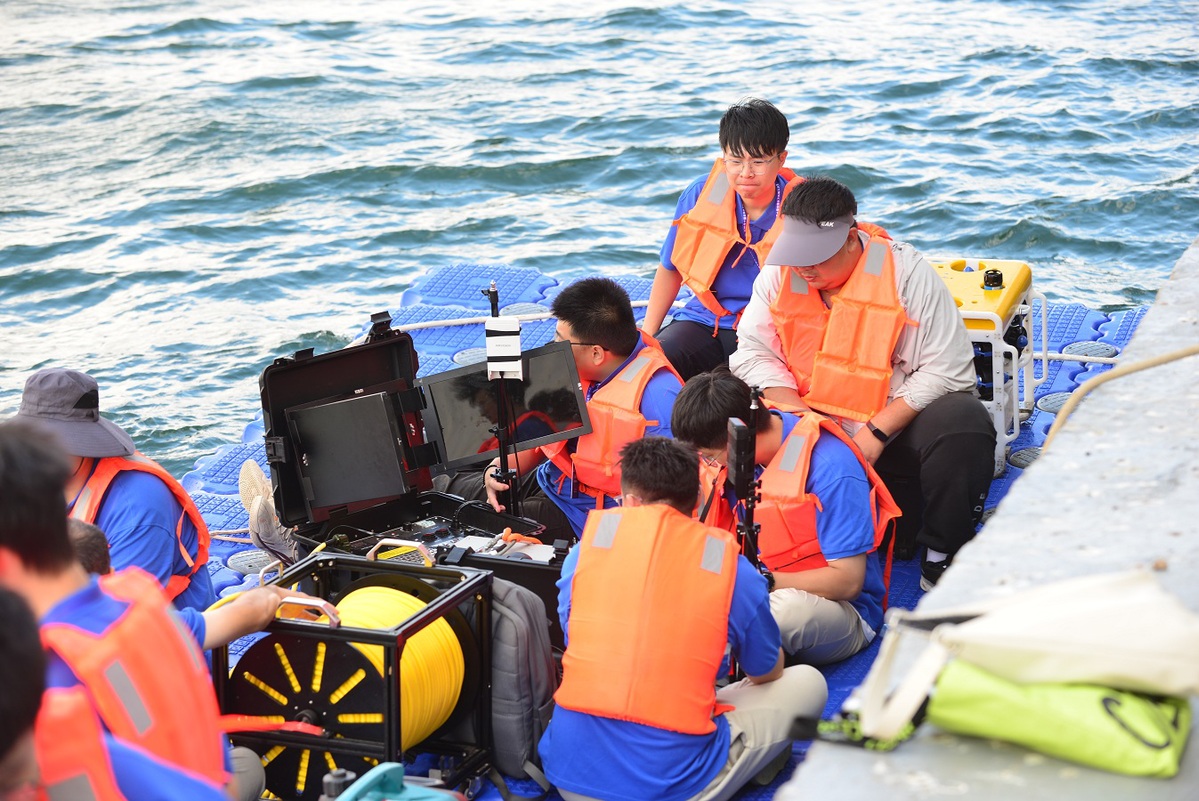
 Teams from Chinese universities, research institutes, and enterprises showcase their underwater robots' capabilities in navigation, communication, and operation during the 10th China Underwater Robot Professional Contest finals in Dalian's open waters. [Photo provided to chinadaily.com.cn]
In the current-swept waters off Dalian, Liaoning province, 30 teams of underwater robots from Chinese universities, research institutes and enterprises spent three days doing more than chasing a trophy: proving they can see, communicate and operate in the sea.
The finals of the 10th China Underwater Robot Professional Contest (URPC) were held from Sept 17 to 20 in open waters 8 to 15 meters deep at Xinghai Bay and Lingshui Port in Dalian, exposing robots to complex sea conditions including turbulent currents, turbid water and changeable weather.
The teams competed in real offshore waters, testing core capabilities in underwater perception and detection, positioning and communication, and intelligent operations.
"This year's competition fully tested the robots' practical performance in underwater observation and operations, achieving multiple technological innovations in autonomous target recognition, automated detection and efficient intelligent operations," said Yang Tingting of the Qianhai Institute of Peng Cheng Laboratory.
"New technologies such as binocular vision recognition and millimeter-wave communication were widely used, building up valuable cutting-edge technological reserves for seabed exploration, marine facility maintenance, marine rescue and other real-world scenarios," she said.
The event was guided by the National Natural Science Foundation of China and co-hosted by the Dalian municipal government and Peng Cheng Laboratory. Dalian University of Technology, Dalian Maritime University and other institutions organized it.
"Unlike common smart products such as drones, underwater robots have specific operating environments and application scenarios," said Wang Lei, a professor at Dalian University of Technology's School of Software.
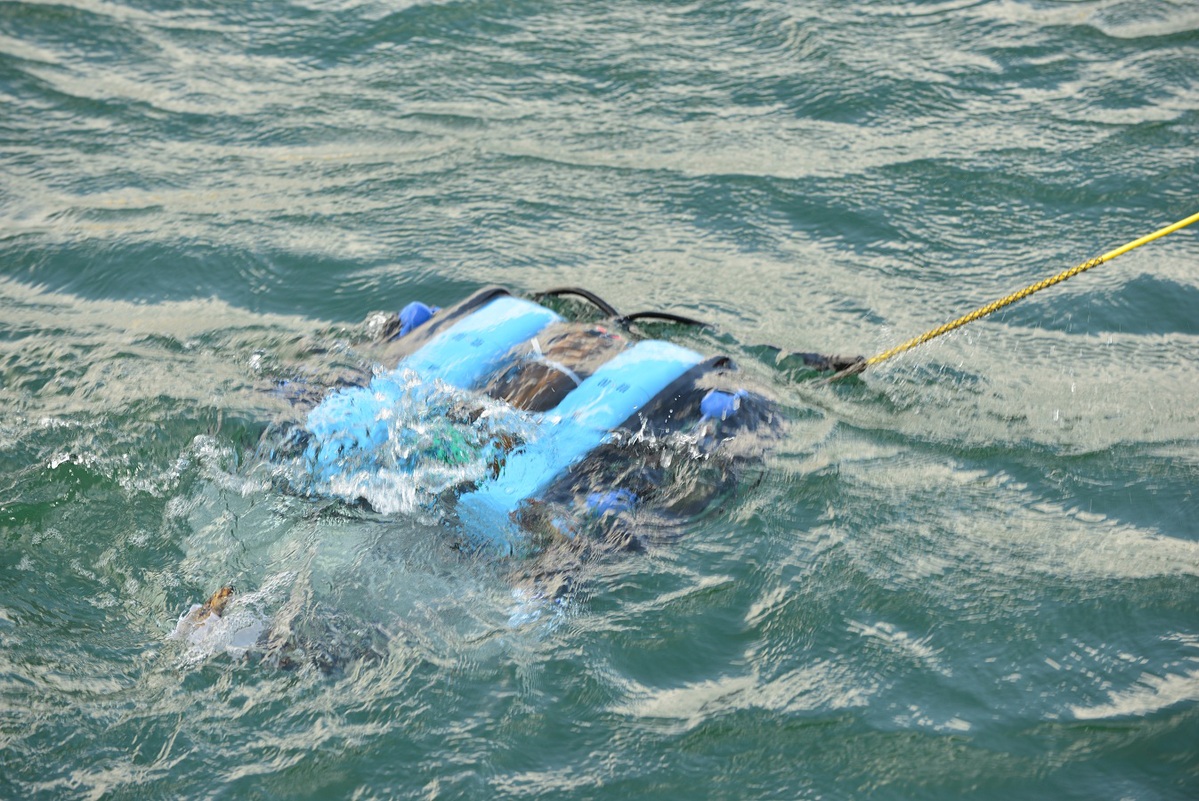 Teams from Chinese universities, research institutes, and enterprises showcase their underwater robots' capabilities in navigation, communication, and operation during the 10th China Underwater Robot Professional Contest finals in Dalian's open waters. [Photo provided to chinadaily.com.cn]
Compared to the competition's early years, he said the technical level of participating teams has improved markedly. Robots now widely use large learning models, and their recognition and response speeds have increased significantly.
This year's event featured four competition tracks: human-machine collaborative grasping group, the autonomous grasping group, the underwater communication group, and the special mission. Organizers said the system covers the full chain of basic research and development, key technology breakthroughs, scenario applications and creative innovation.
Severe weather this year brought strong winds and waves, greatly increasing the challenge. Yet teams rose to the occasion and delivered impressive results.
"Our team achieved a good result, winning first place in both human-machine collaboration and autonomous grasping," said Meng Guanchen, a doctoral student at DUT. He said the team would use the valuable experience from the competition to further improve its underwater robot.
Since its launch in 2017, the national contest has become the highest-level, largest and most broadly representative professional science and innovation event in China's underwater robotics field.
Over the past decade, it has brought together more than 60 universities and research institutes at home and abroad, more than 200 research teams and over 1,500 contestants. More than 150 invention patent results have been commercialized, as the event continues to help promote the tackling of key core technologies in marine intelligent equipment.
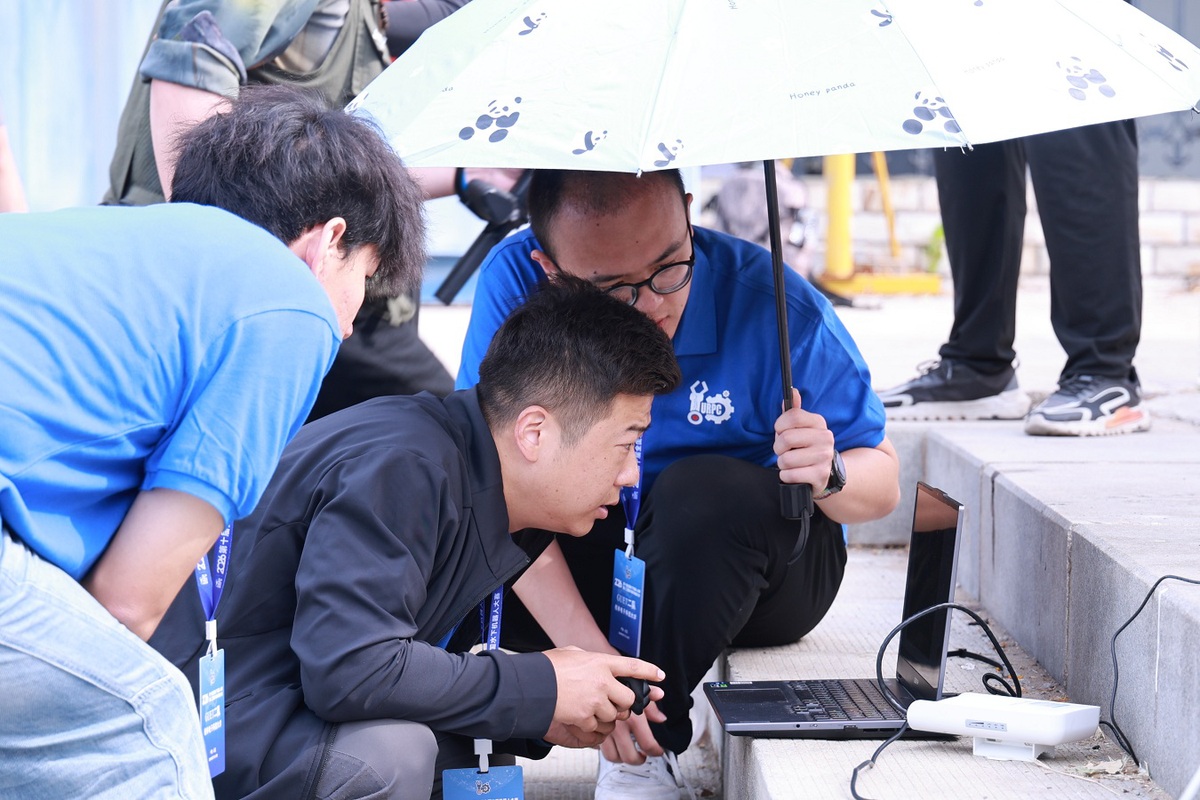 Teams from Chinese universities, research institutes, and enterprises showcase their underwater robots' capabilities in navigation, communication, and operation during the 10th China Underwater Robot Professional Contest finals in Dalian's open waters. [Photo provided to chinadaily.com.cn]
It has become a core platform for talent cultivation, technology iteration and industrial matchmaking in China's underwater intelligent equipment sector.
On Sunday, the 2026 artificial intelligence and marine equipment conference and the URPC award ceremony were held. As part of the competition's 10th-anniversary achievements, DUT and DMU each unveiled an innovation platform.
DUT released the Beiming Lingshu platform.
"Beiming means the northern sea; Ling refers to intelligence and agility; Shu means hub. Together, the name signifies an intelligent hub connecting marine data and smart equipment," said Lei Na, a professor at the university.
The platform is positioned as general-purpose intelligent infrastructure connecting marine missions with real equipment. It focuses on challenges such as the difficulty of perception, understanding and collaborative operations for intelligent equipment in complex marine environments, as well as the disconnect between algorithm development, simulation verification and real-machine operation.
The smart marine information technology public innovation platform, led by DMU and Dalian Zhangzidao Ocean Development Group, is expected to become a pilot-test base integrating marine environment simulation, real-sea condition verification and pilot-scale supporting facilities.
"With this platform, we will move underwater robots from the laboratory to deep-sea scenarios and build China's 'DJI of the deep sea'," said Fu Xianping, a professor at DMU.

