
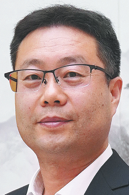
Zhang Shijun
For much of the past year, Chinese neurosurgeon Zhang Shijun's most vital instrument was not the advanced craniotomy system he was accustomed to using in brain surgery, but simple, handheld skull drills.
During his one-year medical aid mission in the Northeast African nation of Eritrea, which ran from July 2025 to July 2026, Zhang, 47, learned that when stripped of the high-tech trappings of a modern operating room, a doctor's most valuable assets are solid technical skills and an unwavering resolve under pressure.
"Back in my home hospital, we're used to having a high-powered electronic drill spinning within seconds just by releasing the foot pedal," he said. "In Eritrea, we could only rely on manual equipment most of the time, putting our wrist and shoulder strength into turning the drill over and over again."
"Moving from a well-equipped surgical room to an environment with scarce resources was a tough lesson for many of us medical aid workers. But we've all learned to overcome these challenges and live up to the trust our local patients have placed in us," he said during an interview ahead of China's ninth Doctors' Day, celebrated annually on Aug 19.
Zhang is the deputy director of the neurosurgery department at Yellow River Sanmenxia Hospital in Henan province. He also served as deputy head of the 18th Chinese medical aid team to Eritrea, which comprises 18 medical experts. They all come from Henan and specialize in a broad range of fields including radiology, surgery, traditional Chinese medicine and anesthesiology.
In Eritrea, the Chinese team was based at the Orotta National Referral Hospital in the capital city of Asmara and several other local medical institutions.
Throughout the mission, the team received more than 35,600 patient visits, performed or guided over 4,100 surgeries, delivered TCM therapies to nearly 20,000 patients, conducted 9,000 CT and ultrasound examinations, and trained about 180 local medical workers.
As one of just two neurosurgeons on the team, Zhang said they were the only surgeons in the country capable of handling complex neurosurgical cases. While he was accustomed to the high-stakes pressure and critical decisions inherent in his specialty, the realities on the ground continually challenged him in ways he had never anticipated.
His most memorable case involved a man in his 20s who was transferred from a remote area to the hospital three days after falling into a coma due to a spontaneous intracerebral hemorrhage. Such cases were not uncommon in Eritrea, where long travel distances and inconvenient transportation often left patients in critical condition before they could reach medical help.
"His one pupil was already blown and there was no movement in any limb. His brain was herniating and he could die at any moment," Zhang said. "As an emergency head CT showed a hematoma in the brain, we decided to perform emergency surgery to clear the clot."
"There was no scrub nurse, so we picked our own instruments and used them ourselves. There was no surgical microscope or other advanced equipment. We had just one hand drill, and the bit wasn't very sharp," he said. "After drilling four holes in his skull, I was drenched in sweat, and my wrist was sore and shaking."
In the middle of the surgery, the bipolar coagulator used to control bleeding suddenly malfunctioned, and Zhang had to quickly apply pressure to the surgical site using a gelatin sponge.
"We had to swap out three different bipolar units before the device started working," he said.
The surgery was eventually completed after about three hours.
"When the patient gradually woke up and his limbs started moving again, it hit me that in conditions that bad, one slip in surgery and the outcome could have been totally different," he said.
"What I had relied on in those intense moments wasn't just my technical skill, but also the trust of a man handing me his life — and I cannot fail that kind of trust," he said.
After familiarizing himself with the local conditions, Zhang said he performed about six surgeries a week on average, and occasionally four surgeries a day on their busiest days.
"We had brought a type of cranial perforator and special drainage tubes from China in advance, having learned that there was a high prevalence of chronic subdural hematoma. With the domestic device, a procedure to address the condition took only 10 minutes, compared with about an hour before," he said.
"As a result, more patients could receive timely care," he added.
Tewelde Yohannes, medical director of Orotta hospital, said Chinese doctors play an important role in filling gaps in certain areas of expertise.
"They are always available, always willing, very cooperative, smiling, humble and ready to work at any time around the clock," he said during an interview with local television station Eri-TV. "We are very thankful and grateful for the support they give us, and we want it to continue."

