
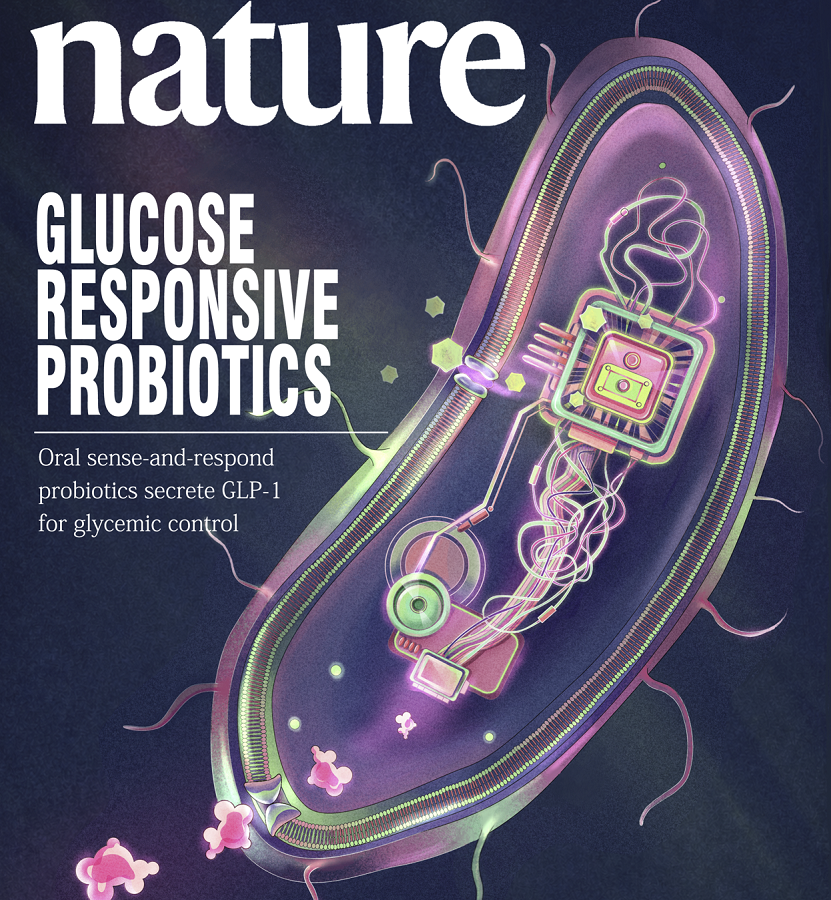
A research team from School of Life Sciences at East China Normal University in Shanghai unveils a new approach for diabetes treatment, with their findings published in the journal Nature on Aug 12. [Photo provided to chinadaily.com.cn]
A research team from East China Normal University in Shanghai developed an engineered oral-deliverable glucose-sensing and functional response probiotic (GIFT) living drug for "sense-and-respond"-based control of diabetic blood glucose, marking a brand-new approach for diabetes treatment.
The research was conducted by researchers from the university's School of Life Sciences, and the findings were published in the journal Nature on Aug 12.
Using synthetic biology techniques, the research team engineered a probiotic with a century-long history of safety into an "intelligent virtual organ" that can be taken orally and reside temporarily in the intestine. It can sense blood glucose fluctuations in real time and autonomously secrete glucose-lowering hormones, enabling therapeutic dosing in response to real-time blood glucose levels, and providing a programmable, orally deliverable sense-and-respond platform for metabolic therapy without transplantation.
This approach shifts diabetes blood glucose management from the traditional passive model of injections and medication to a new paradigm of "oral implantation and autonomous regulation", achieving true on-demand drug delivery and physiological-level closed-loop control.
Diabetes has become a major chronic metabolic disease threatening public health worldwide. According to the latest statistics from the International Diabetes Federation, the number of adults with diabetes globally has exceeded 530 million and is projected to surpass 850 million by 2050. China has approximately 120 million people with diabetes.
The GIFT would offer hundreds of millions of people with diabetes worldwide a Chinese approach that is safer, gentler and more in tune with the body's natural instincts, marking China's position at the forefront of the global field of smart living drugs and precision treatment for metabolic diseases.
"GIFT offers a novel approach to precise blood glucose management in diabetes by coupling glucose sensing with on-demand GLP-1 secretion. It represents a significant advancement in the field of engineered probiotic living drugs," said Ye Haifeng, corresponding author of the paper and professor from School of Life Sciences at East China Normal University.
He added that compared to mammalian cell-based therapies, oral probiotics can avoid the complexities and immunogenicity risks associated with transplantation. And compared to engineered bacteria that constitutively express GLP-1, GIFT offers superior stability, druggability and safety.

