
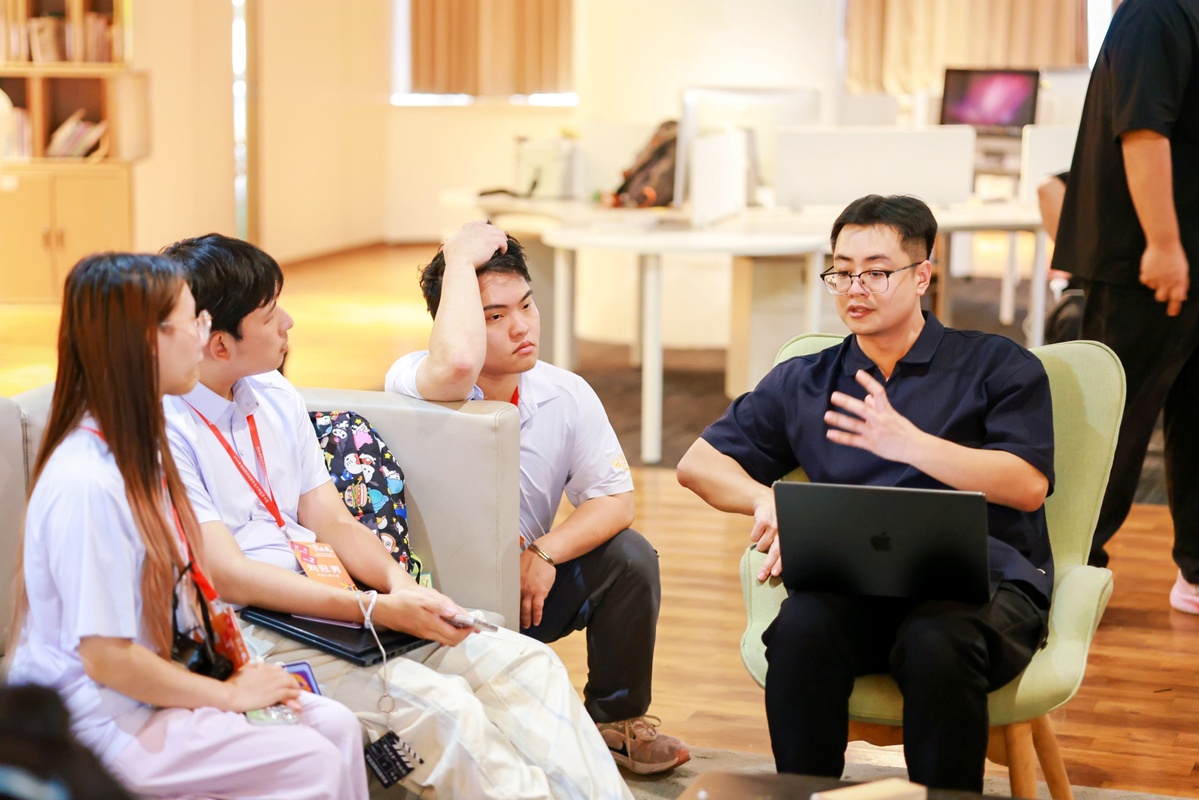
A week-long camp brings together journalism students from the Chinese mainland and Taiwan to foster dialogue among young people on both sides of the Strait through joint video production and cultural tours. [Photo provided to chinadaily.com.cn]
A week-long camp bringing together journalism students from the Chinese mainland and Taiwan opened Tuesday at Zhengzhou University in Henan province, aiming to foster dialogue among young people on both sides of the Strait through joint video production and cultural tours.
This edition of the program emphasizes the use of artificial intelligence in short-video storytelling. Participants will write scripts, shoot on location, and produce finished pieces in mixed teams.
Shen Yibing, director of the Taiwan, Hong Kong, and Macao affairs department of the All-China Journalists Association, said that as students eat, live, and travel together, their daily contact builds trust and helps them understand each other.
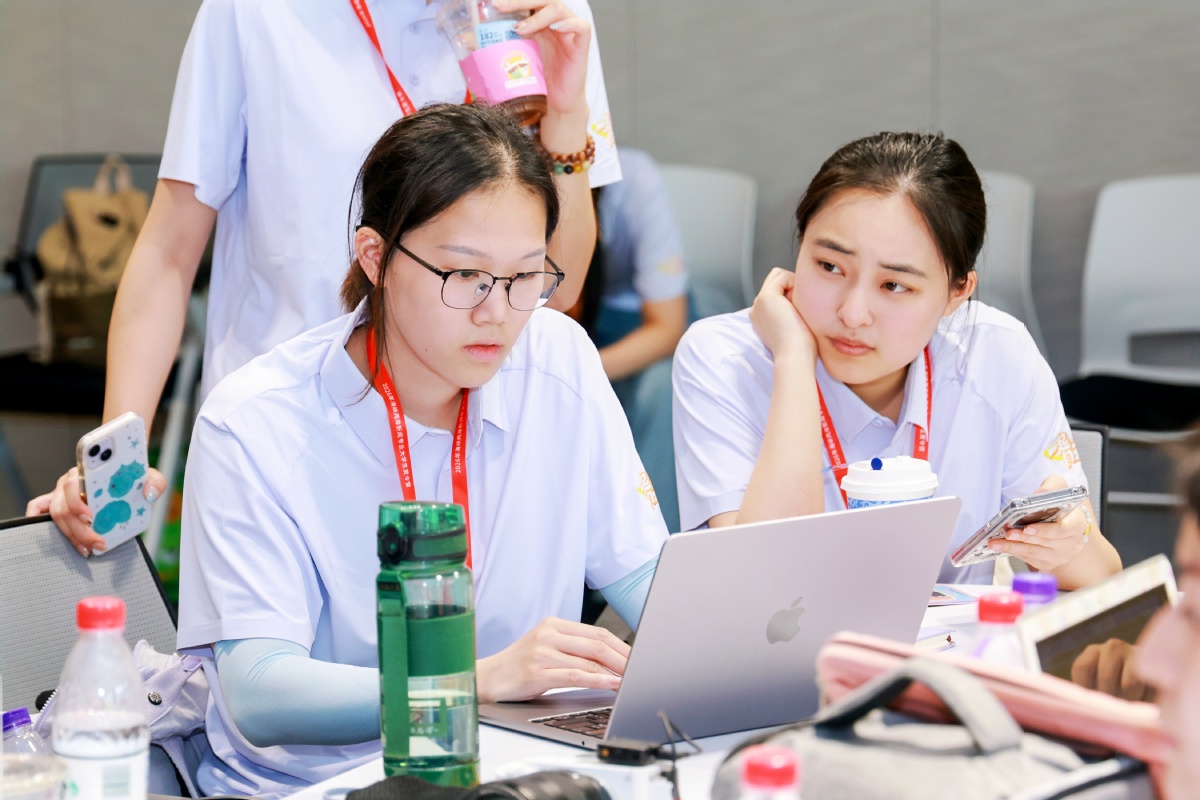
A week-long camp brings together journalism students from the Chinese mainland and Taiwan to foster dialogue among young people on both sides of the Strait through joint video production and cultural tours. [Photo provided to chinadaily.com.cn]
The camp first ran in 2004, and eventually expanded to twice per year. This session is co-hosted by the All-China Journalists Association, Taiwan's Chinese Press Institute, and Taiwan's Shih Hsin University. It runs through July 20.
It brings together students from Beijing, Shanghai, Xiamen, Henan province, and Taiwan for hands-on work in AI-assisted micro-drama creation, along with visits to historical sites and media organizations.
Tung Suh Lan, a veteran journalism professor at Shih Hsin University and head of the Taiwan delegation in the camp, called the camp a meeting of shared interests. "We share a passion for journalism, an appreciation for Chinese culture and a willingness to connect," she said.
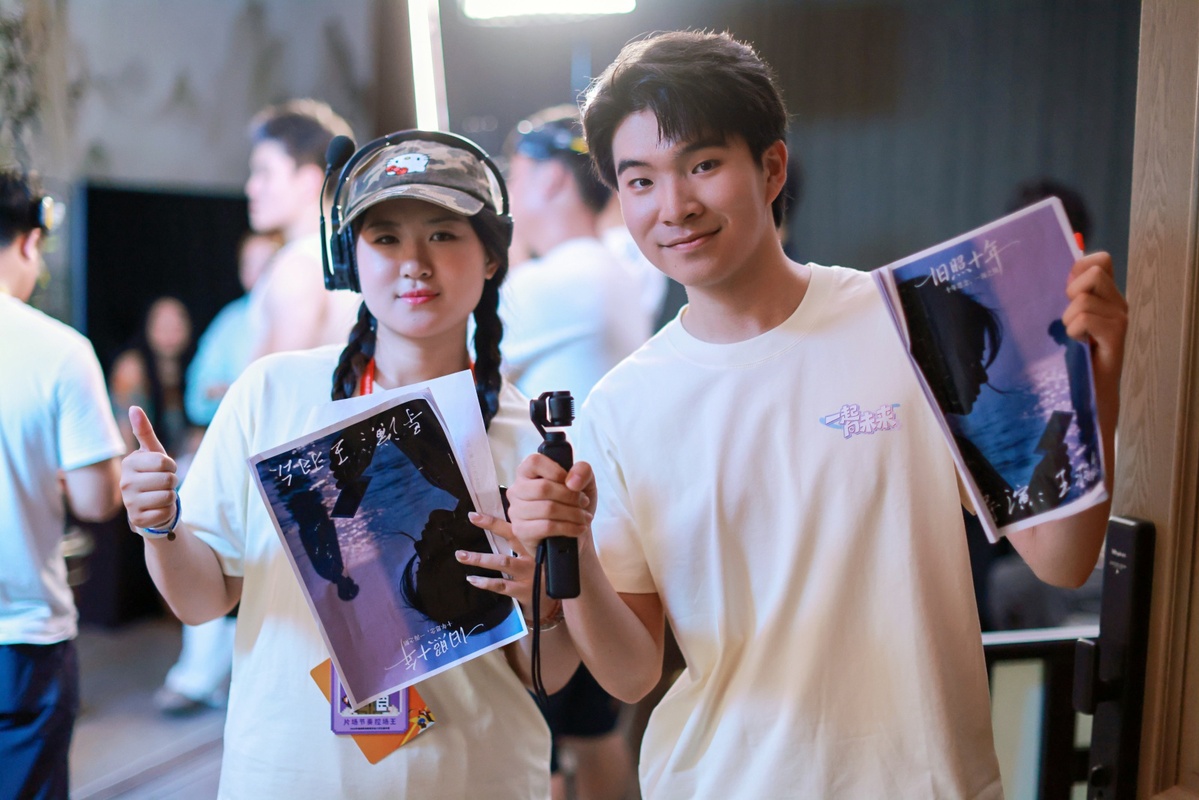 Students experience the life of a crew on a short film set. [Photo provided to chinadaily.com.cn]
The itinerary includes visits to the Shaolin Temple, the Longmen Grottoes, and "Unique Henan", a large-scale immersive theater complex. Organizers said the activities are meant to give students from Taiwan a closer view of the economic, social, and cultural changes in Henan.
Chen Tai-chia, 21, a journalism major at Shih Hsin University, said he had long wanted to visit historical sites on the mainland. "We are all descendants of the Yan and Huang emperors," Chen said. "Seeing these places in person is a feeling you cannot get from a screen or a textbook."
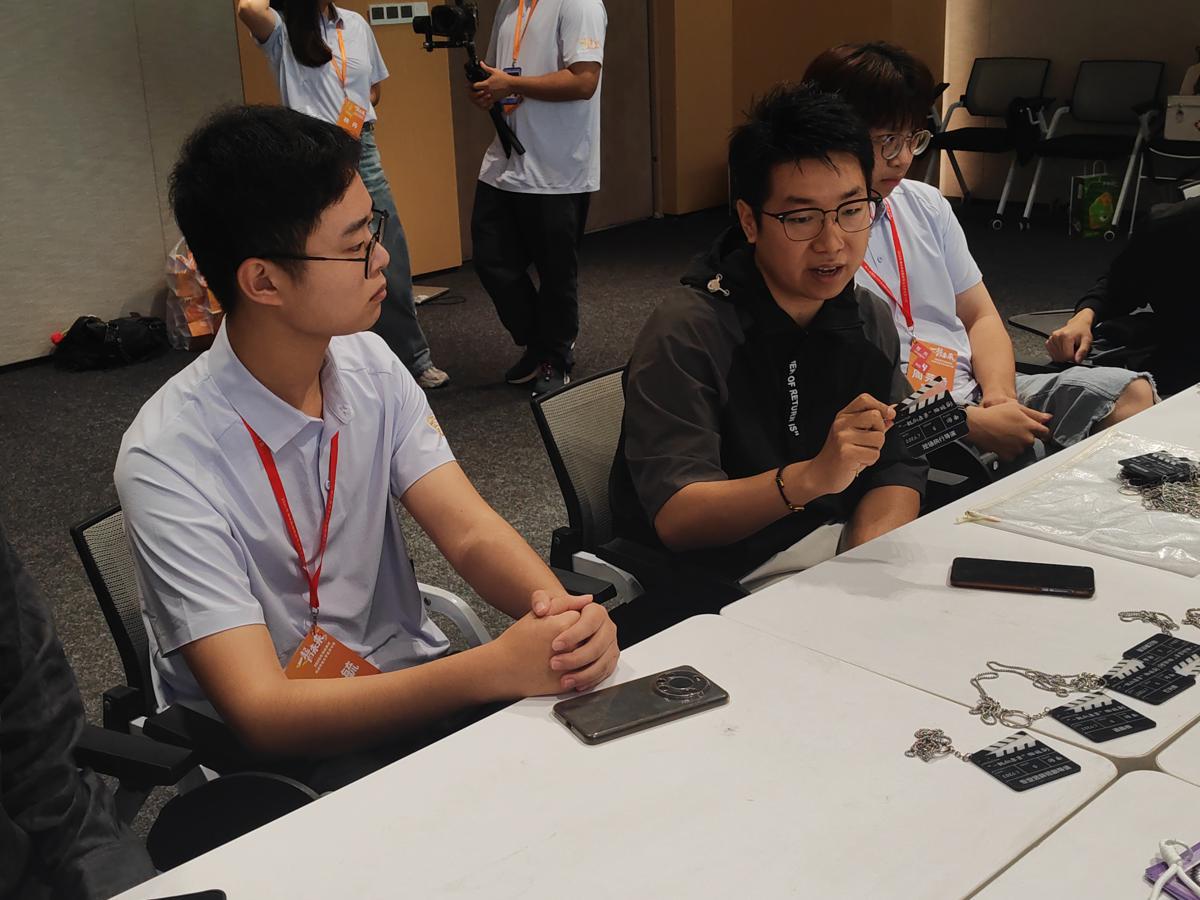
A director guides students from both sides of the Taiwan Strait. [Photo by Qi Xin/for chinadaily.com.cn]
Liu Guannan, a journalism graduate student at Renmin University of China, said hearing the many dialects of students from different places was one of the pleasures of the camp.
Wu Weihua, a professor from the Communication University of China, said short-film creation demands a different way of thinking from the traditional journalism taught in textbooks. The exchange of ideas among students from both sides of the Strait, he added, has sparked fresh thinking that left a deep impression.

