
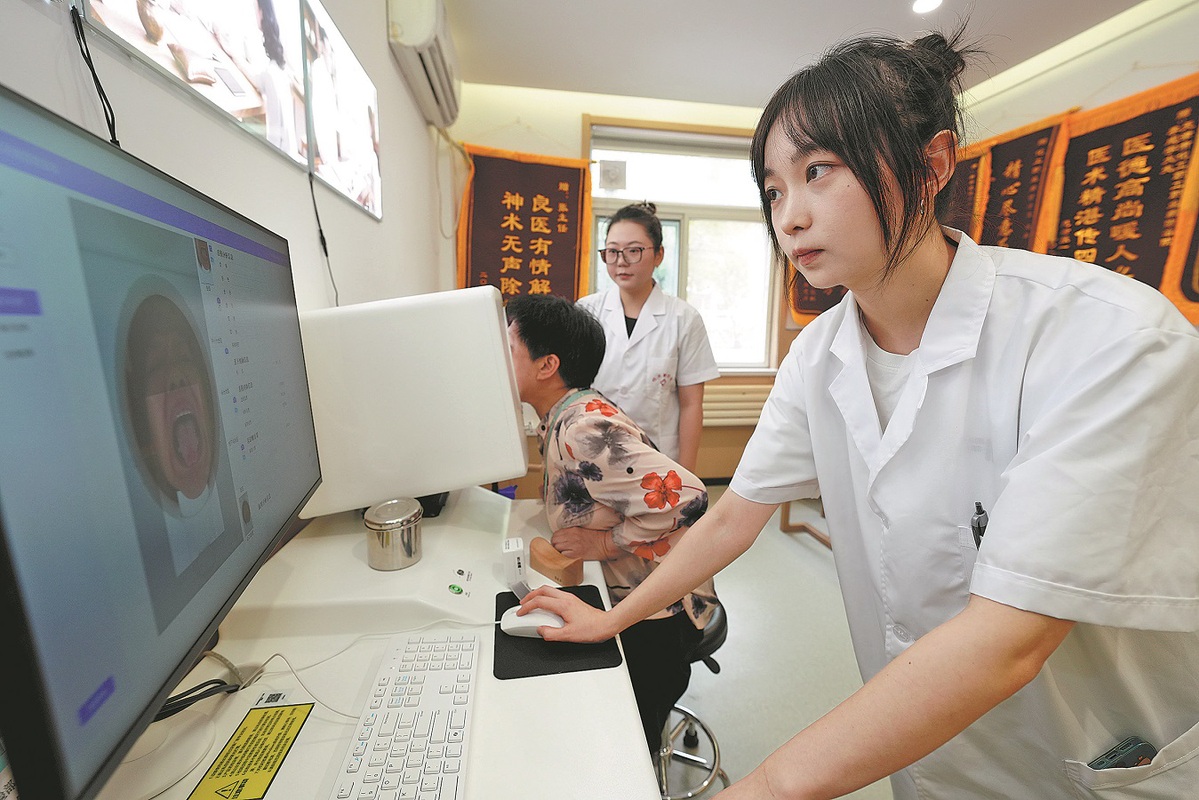
A retired worker undergoes a health check at a traditional Chinese medicine clinic for occupational hazards in Tianjin in September last year. The clinic has adopted an artificial intelligence system that helps medical workers identify abnormalities and make diagnoses. [Photo provided to China Daily]
When the Tianjin 2026 Global Business Leaders Roundtable drew to a close in March, Hussain Dawood did not head for the exit. Instead, the prominent Pakistani industrialist and chairman of Engro Corporation waited behind at the venue, hoping to secure a private consultation with attending experts of traditional Chinese medicine.
His wife suffers from chronic high blood pressure and has undergone various treatments in Pakistan with limited effect. For Dawood, whose family has long trusted Eastern therapeutic philosophies, the trip to Tianjin presented a rare window to access personalized treatment from Da Ren Tang, a century-old Chinese pharmaceutical brand.
"TCM analyzes the root cause of a patient's condition to fundamentally resolve issues, unlike Western medicine or other therapies that merely focus on alleviating symptoms," Dawood said.
"The Western medical tradition is to prescribe the same medication for the same ailment, thus providing uniform treatment," he added.
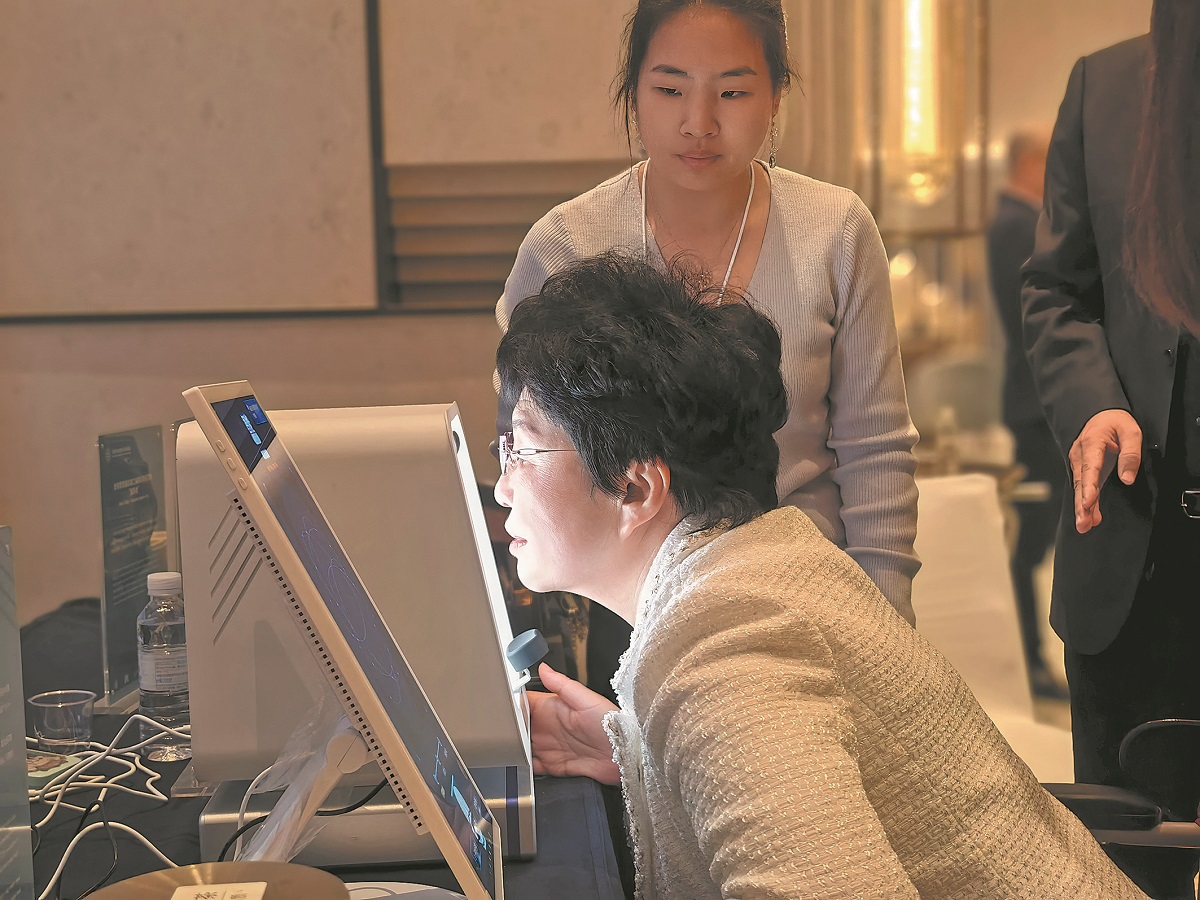 Wang Lei, chairwoman of Tianjin Pharmaceutical Da Ren Tang Group, tries a TCM diagnostic analyzer during the Tianjin 2026 Global Business Leaders Roundtable in March. [Photo provided to China Daily]
Wang Lei, chairwoman of Tianjin Pharmaceutical Da Ren Tang Group, said the wisdom of TCM lies in its personalized approach. Even for the most common cold, TCM recognizes that some people catch it due to "heat" while others due to "cold". When TCM spreads to different countries, it must also adapt to the local climate and physical characteristics for effective diagnosis and treatment, Wang said.
That tension between age-old customization and the demands of global scale is driving a massive technological overhaul within China's TCM sector. At the Tianjin summit, which drew nearly 300 political, business and academic delegates, the modernization of TCM emerged as a highly anticipated focal point.
"The core of TCM modernization lies in the deep integration of technological and industrial innovation. We are actively participating in new projects to achieve this goal," Wang said.
The flagship initiative driving this shift is the Tianjin Modern TCM New Quality Productive Forces Innovation Project. Proposed and implemented by a team under Zhang Boli, an academician of the Chinese Academy of Engineering and a renowned TCM specialist, the project involves a total investment of 180 million yuan ($24.8 million) aimed at digitizing production.
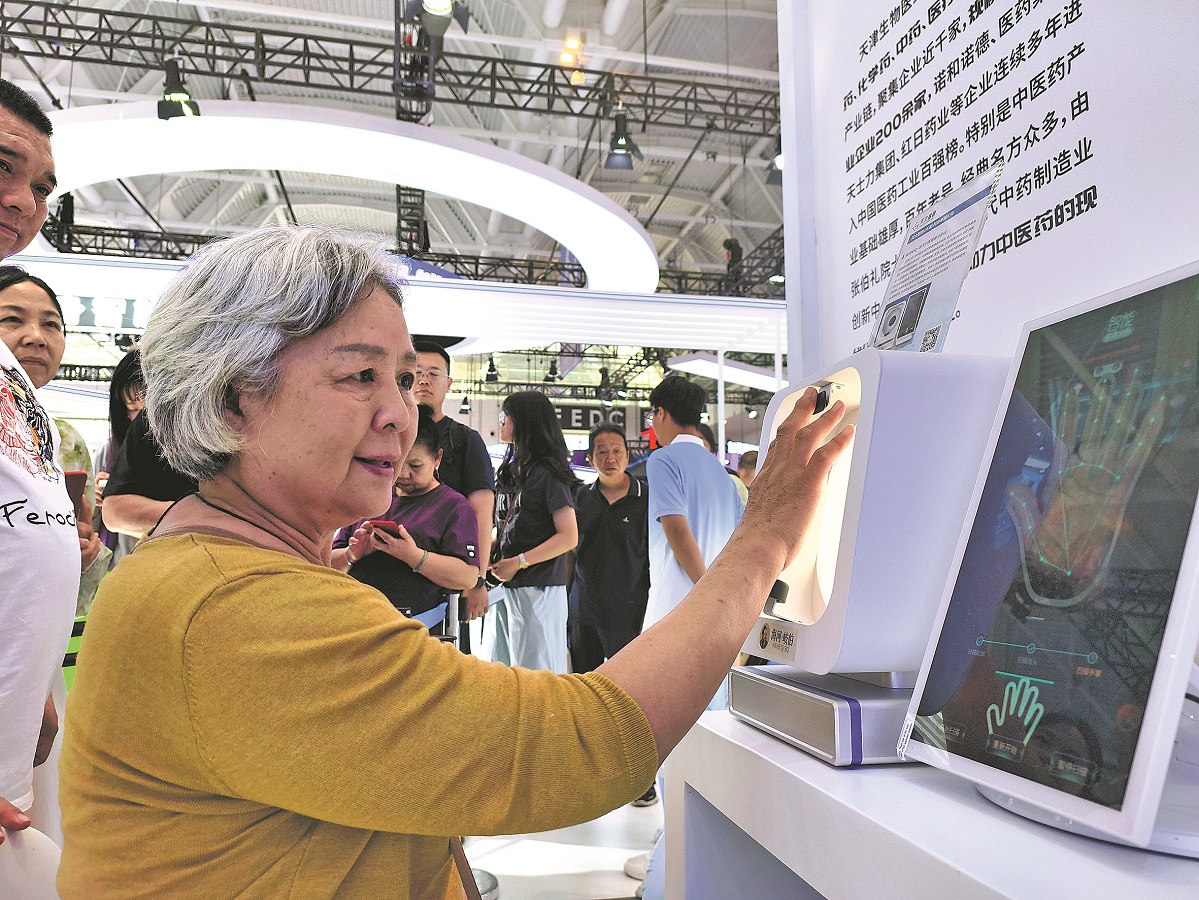 An elderly woman tries a TCM health analyzer during the World Intelligence Expo in Tianjin on May 31. [Photo provided to China Daily]
"This project utilizes AI to achieve full traceability and monitoring throughout the production process," said Zhang. For instance, during the decoction of TCM herbs, which requires a gentle boiling state, traditional pharmacists can only estimate the temperature by observing bubble size, with a margin of error of around 10 C. Now, with robotic control, the optimal temperature of 102 C can be precisely maintained. This can contribute to a 15 percent reduction in energy consumption and an improvement in the quality of the medicine.
At the scientific and technological achievements exhibition area of the Global Business Leaders Roundtable in Tianjin, an AI-powered TCM diagnosis instrument attracted foreign guests, who came to experience it. They were amazed by the fact that a diagnostic report containing physical constitution identification and health advice could be generated within just a few seconds.
The instrument captures visual information such as tongue patterns and facial features, uses AI algorithms for constitution identification and health status analysis, and quickly generates TCM constitution identification reports.
"The TCM industry transitioned from manual operations to mechanization and electrification in the 1970s and 1980s. Now it has entered the digital era," Zhang said.
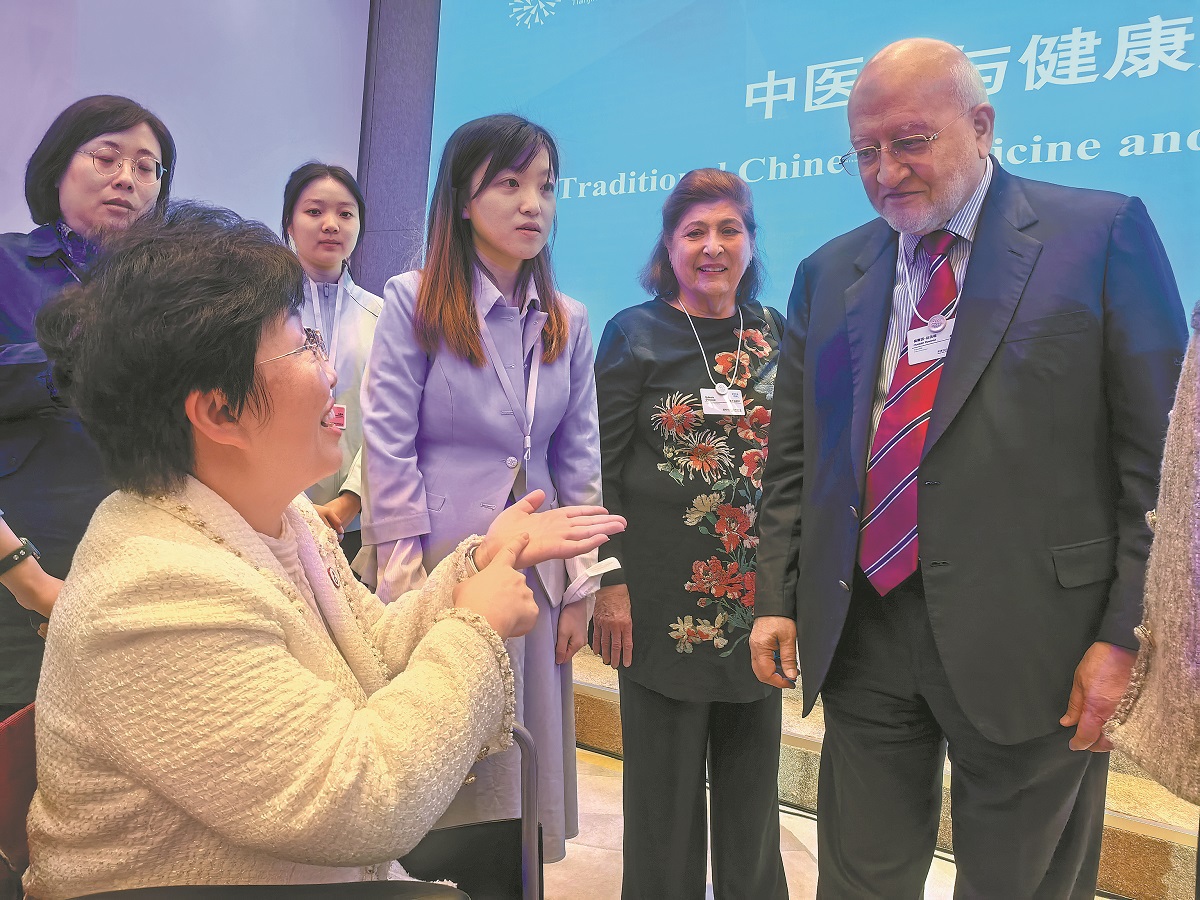 Wang Lei (front left) talks with Hussain Dawood (right) during the Tianjin 2026 Global Business Leaders Roundtable in March. [Photo provided to China Daily]
According to Zhang, this digital evolution aligns directly with national policy. During the 2026 National People's Congress, the government's work report explicitly called for "promoting the inheritance and innovation of TCM and facilitating the integration of traditional Chinese and Western medicine".
For example, while Western medicine is highly effective in lowering blood sugar for diabetes patients, TCM has greater advantages in preventing complications. After five or six years, diabetes patients often develop microvascular complications. By incorporating TCM herbs, treatment can prevent or delay the onset of these complications while lowering blood sugar, a model that has received positive feedback from many patients, Zhang said.
This clinical efficacy is translating into overseas expansion. Da Ren Tang, which secured a regulatory pathway into international markets via its listing on the Singapore stock exchange back in June 1997, now exports over 140 products to more than 20 countries and regions.
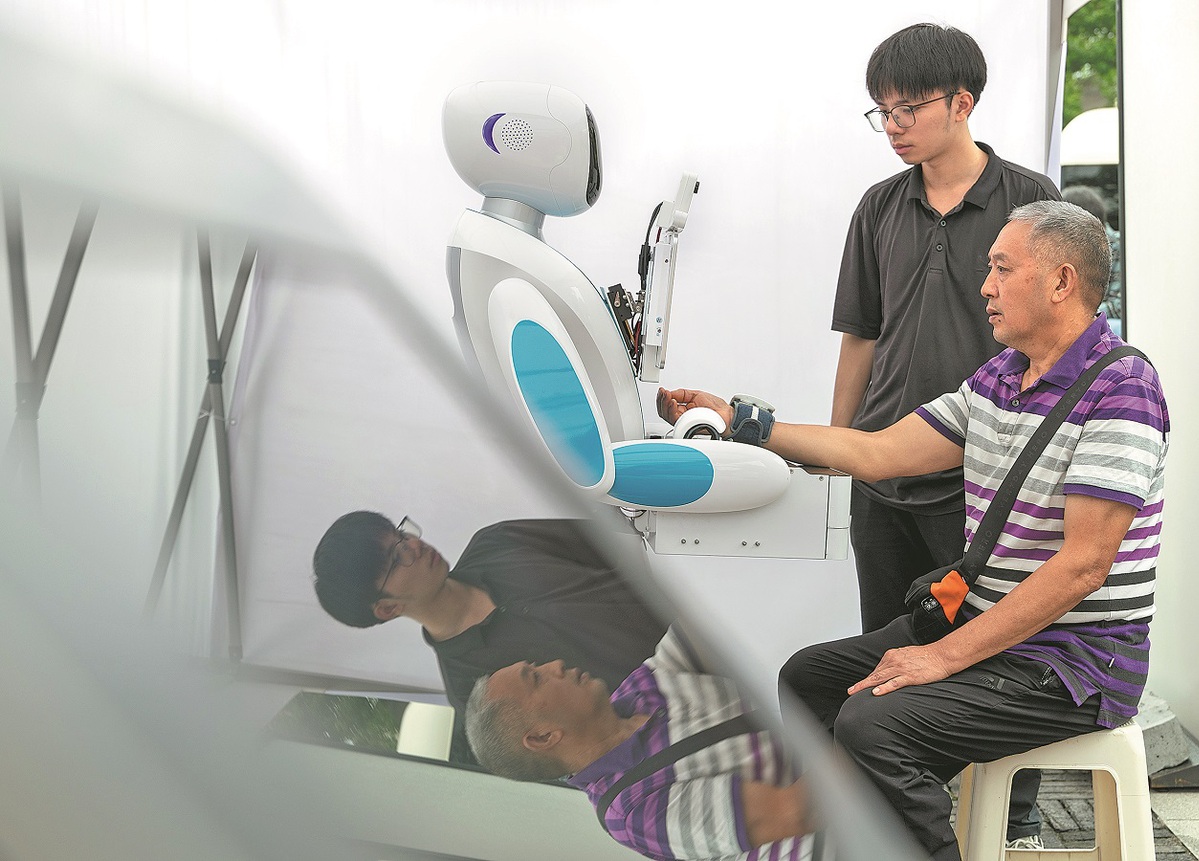 Residents experience a TCM robot diagnostic service in Chongqing in September last year. CHEN CHENG/XINHUA
By 2025, 31 Da Ren Tang products had obtained Singapore standard certification, with core products like Suxiao Jiuxin Pills and Qinggong Shoutao Pills entering mainstream retail stores in the city-state. Da Ren Tang's market value in Singapore has grown by 326 percent, with overall overseas sales increasing by 41 percent, gaining recognition from local consumers, according to the company.
Traditional medicine represents a new frontier for Sino-foreign cooperation and a new growth point for health and cultural exchanges, Zhang said.
Da Ren Tang chairwoman Wang said that over the past 12 years, more than 500 types of its products have entered 47 countries and regions as health supplements, food additives, or dietary supplements.

