

The charming scenery of the Song Mausoleums during summer in Gongyi, Henan province. [Photo by Wang Xiangyang/For chinadaily.com.cn]
Crowds of tourists this summer have opted to visit the stone figures in the wheat fields at the Song Mausoleums in Gongyi, Henan province.
Aptly nicknamed "guardians of the wheat fields", the statues have found a modest popularity on social media. Foreign Ministry spokesman Lin Jian capitalized on the trend with a poetic post on the X platform accompanying a video of the wheat fields: "Harvesters move through waves of grain, while Song Dynasty imperial tomb statues, around 1,000 years old, stand in silence."
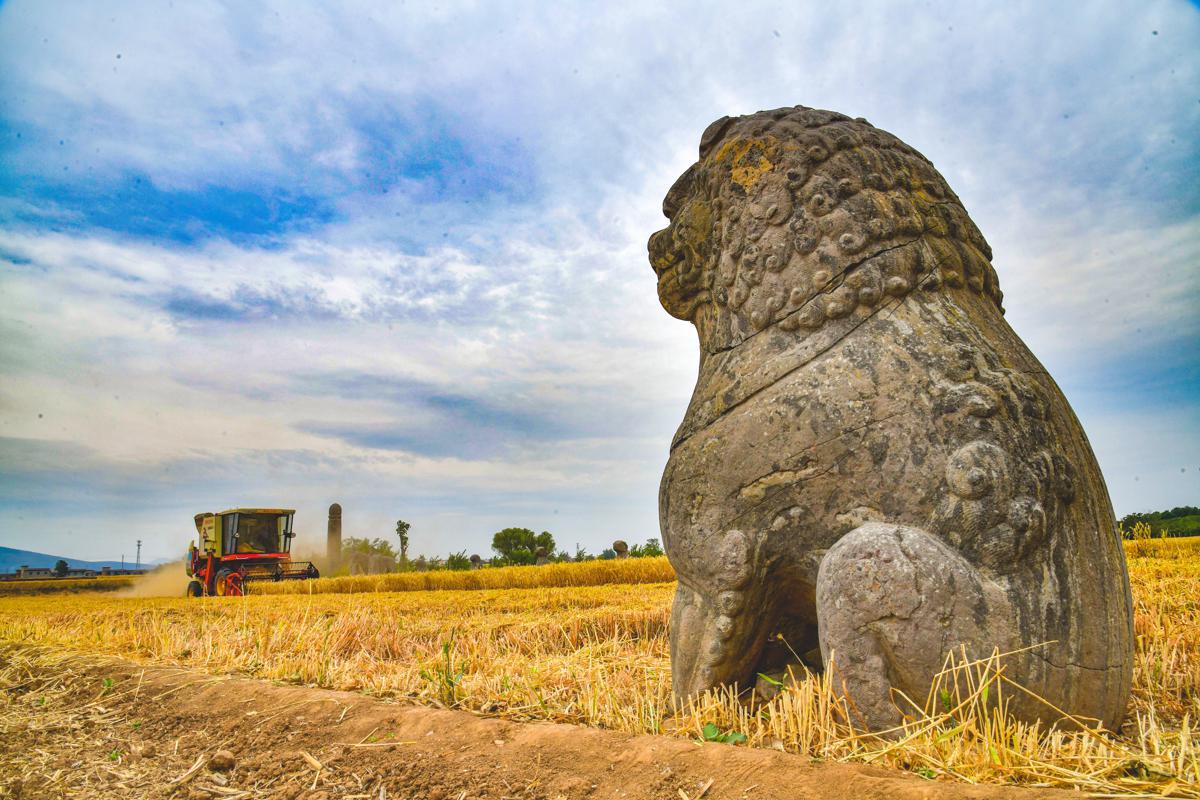
The charming scenery of the Song Mausoleums during summer in Gongyi, Henan province. [Photo by Kang Zhenlin/For chinadaily.com.cn]
Comments from users outside China spoke of the statues' size and the poetic nature of their presence.
The Song Mausoleums are a nationally protected cultural site. The elaborate stone sculptures reflect the prosperity of the Song Dynasty (960-1279), an era that saw the births of three of China's Four Great Inventions, according to Zhu Xingli, director of Gongyi's cultural relics bureau.
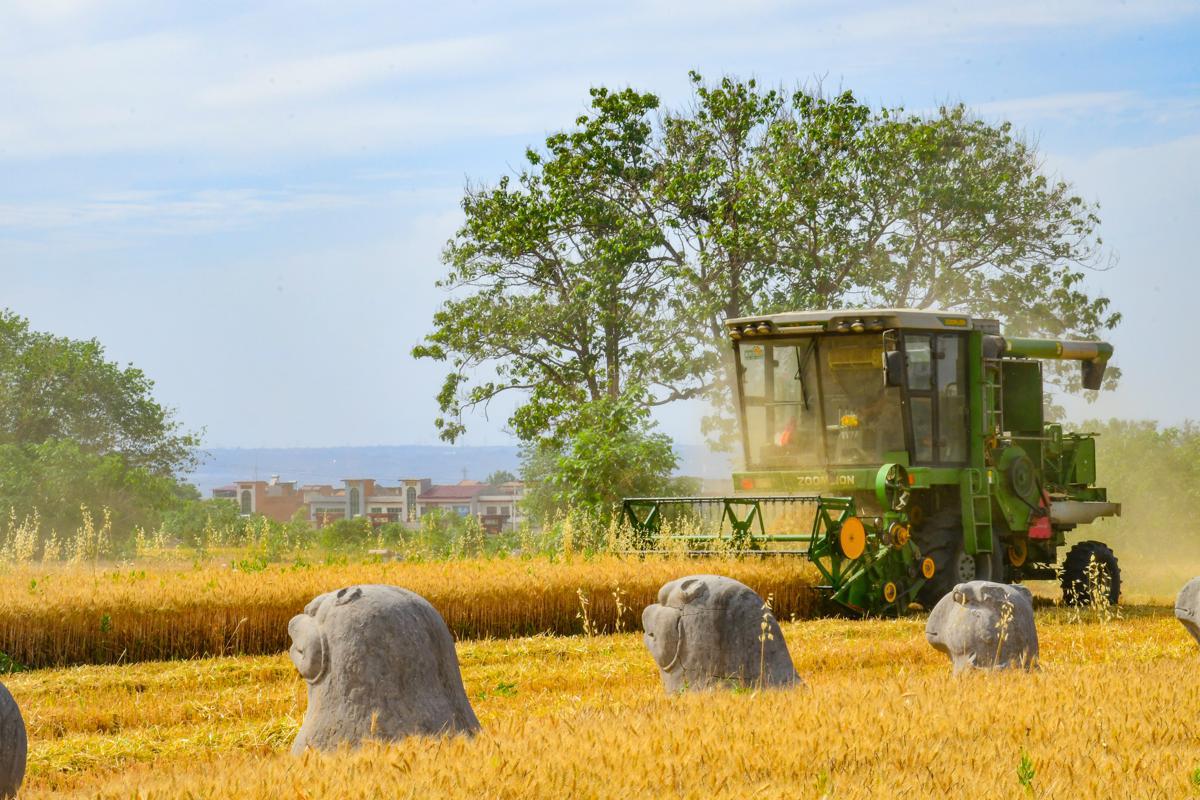
The charming scenery of the Song Mausoleums during summer in Gongyi, Henan province. [Photo by Kang Zhenlin/For chinadaily.com.cn]
Local officials have designed a seasonal planting plan to highlight the mausoleums' beauty year-round. There is rapeseed blooming in spring, wheat maturing in early summer, sunflowers brightening fields in late summer, sorghum growing through autumn, and snow covering the stone statues in winter, Zhu said.
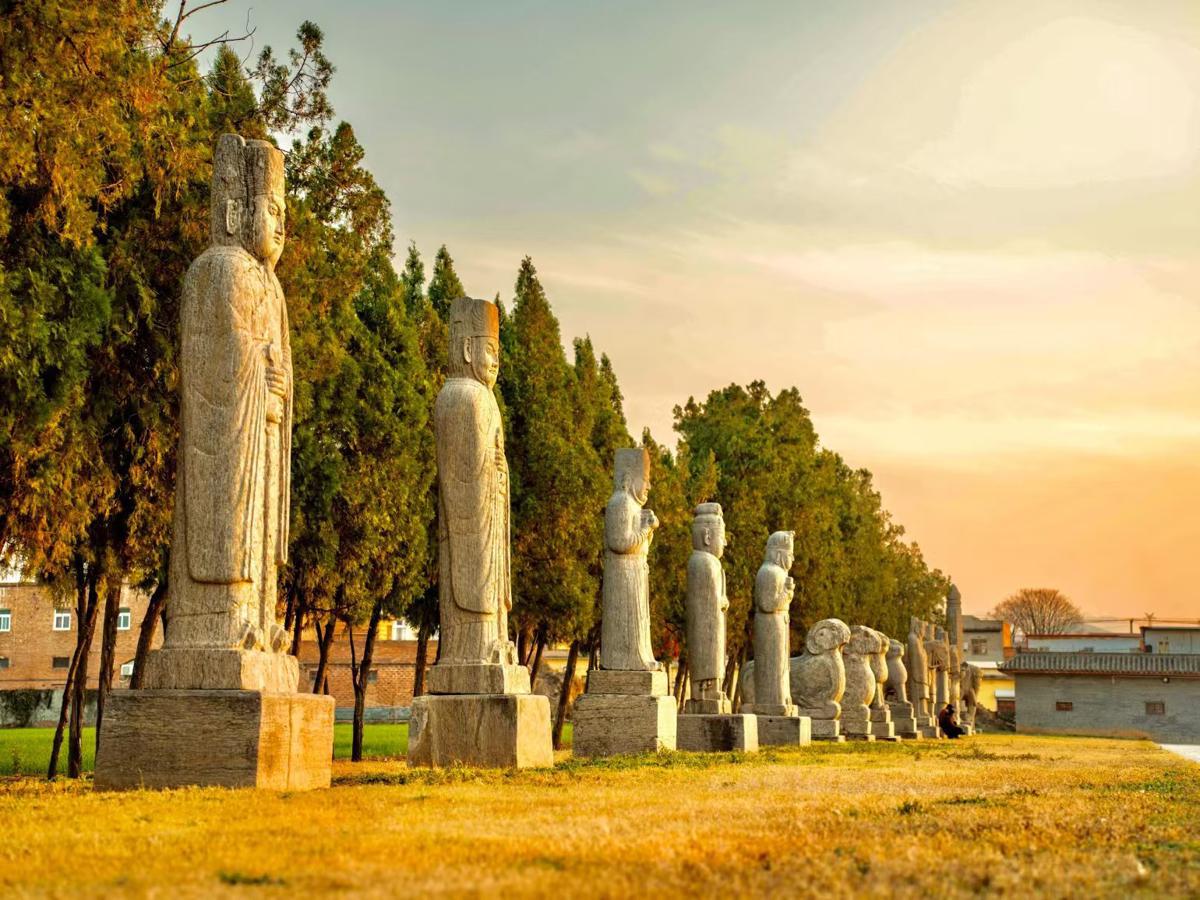
The charming scenery of the Song Mausoleums during autumn in Gongyi, Henan province. [Photo by Pan Jianxun/For chinadaily.com.cn]
Local lives have become intertwined with the cultural relics. When the sun is high, they rest in the shadow of the stone statues, immersing in the interaction between traditional cultural relics and modern people, Zhu said.
The director rejects proposals to cover outdoor stone carvings with glass enclosures, saying that sealed shelters trap heat and moisture and speed up decay. The stone carvings, soil, and farmland have formed a natural balance over hundreds of years. Relocating or fully fencing off the statues would destroy the mausoleums' authentic character.
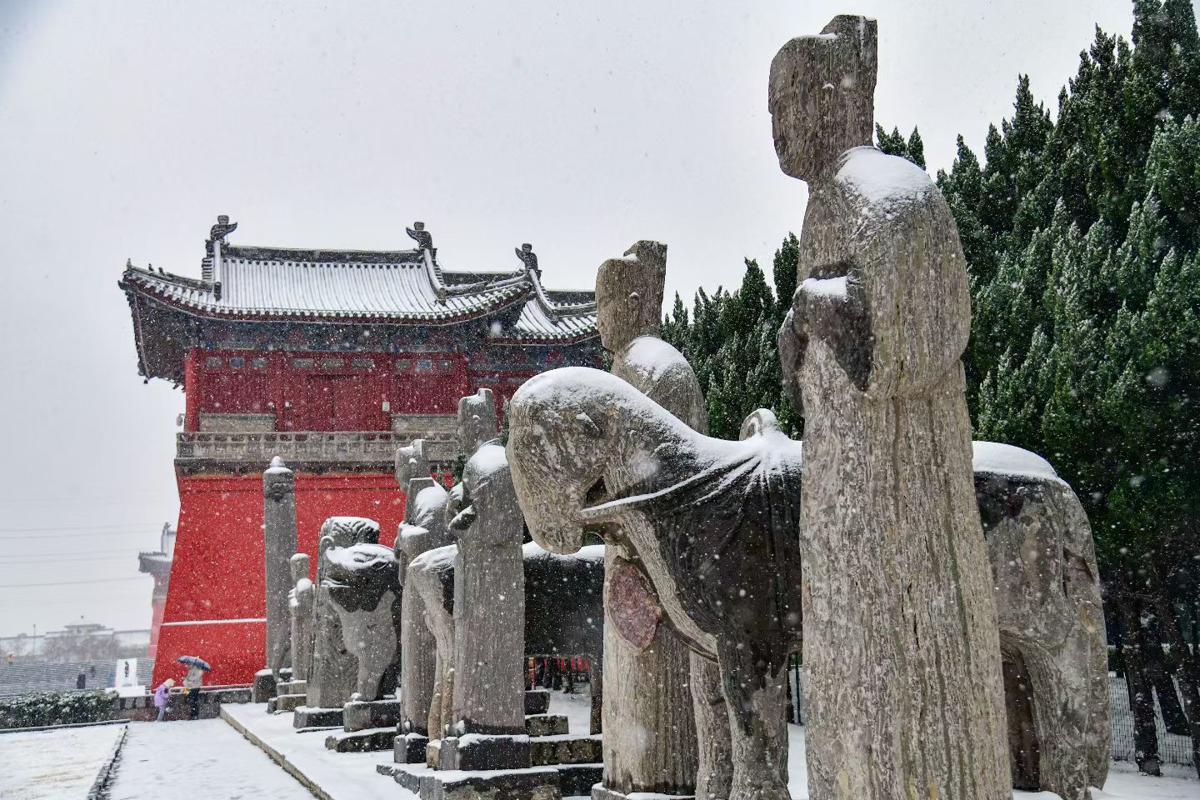
The winter scenery of the Yongzhao Mausoleum at the Song Mausoleums in Gongyi, Henan province. [Photo by Kang Zhenlin/For chinadaily.com.cn]
To prevent farm equipment from scratching or damaging fragile stone carvings and earthen ruins, farmland near the relics is managed collectively. The mausoleum complex is divided into four zones and 11 patrol stations, staffed by about 100 guards. They are supported by cameras and other equipment.
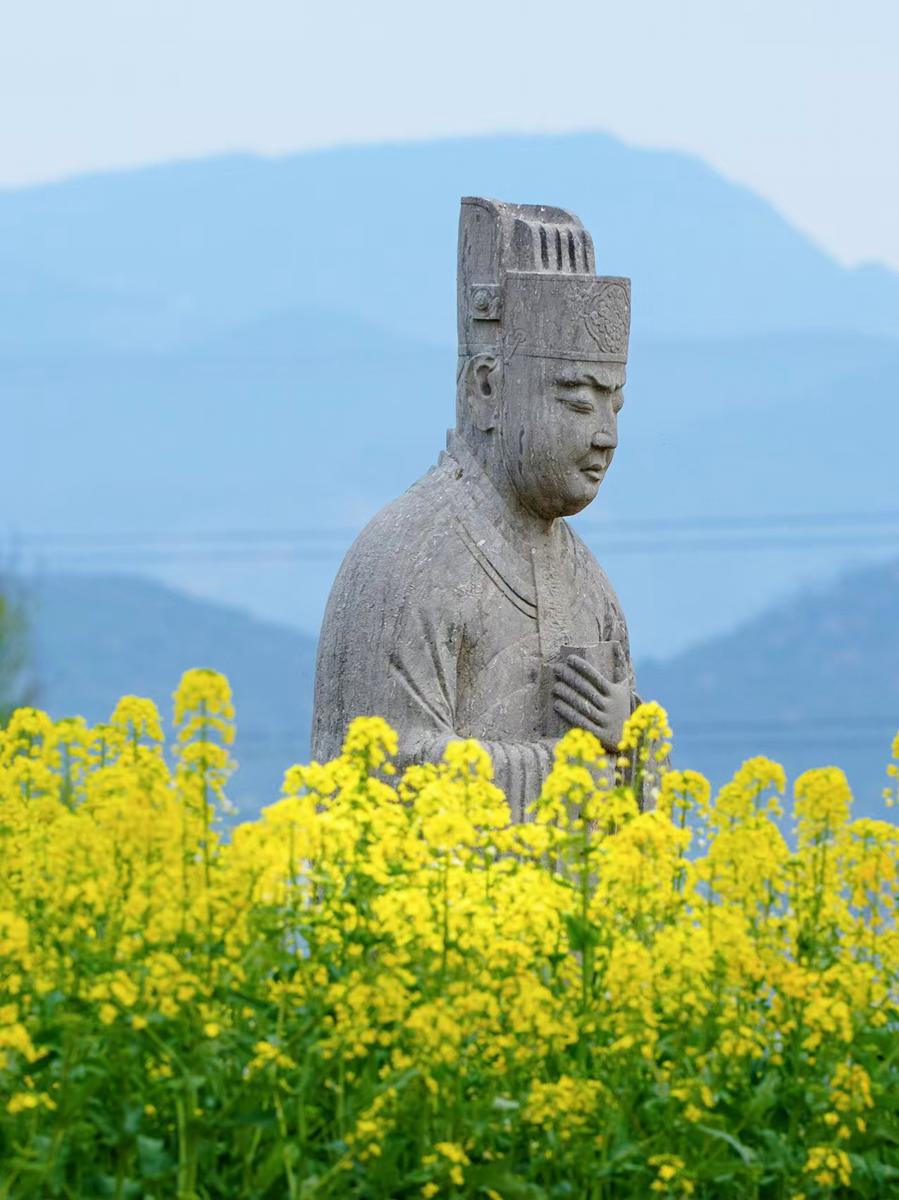
The charming scenery of the Song Mausoleums during spring in Gongyi, Henan province. [Photo provided to chinadaily.com.cn]
Cao Quandang, a 57-year-old local relic guard, said he grew up at this field. "Most relic guards are lifelong local villagers," Cao said.
Many volunteers regularly share heritage protection rules and historical knowledge to raise public awareness. Visitors come to admire ancient stone art and experience the charm of rural life, according to Zhu.

