
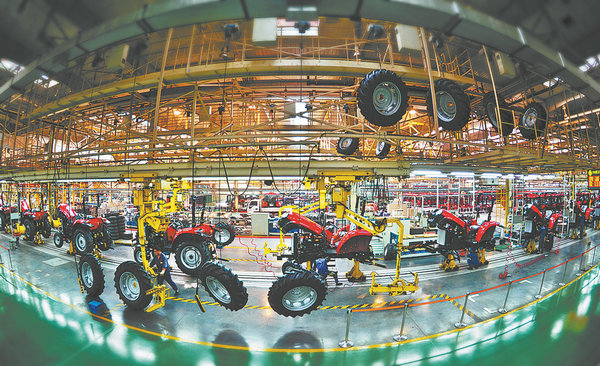
A view of the production line is a highlight during a tour of China YTO, a leading agricultural and construction machinery manufacturer founded in 1955 in Henan province. [Photo provided to China Daily]
In the early 1950s, Peking Opera master Mei Lanfang stood before a niche on the southern wall of the Ten Thousand Buddhas Cave at the Longmen Grottoes in Luoyang, Henan province.
For a long moment, he gazed at a statue of a bodhisattva whose face had long been destroyed. Yet, what he saw was not ruin, but a spirit of grace that reminded him of the line "Startled swan, roaming dragon" from Cao Zhi's (192-232) Ode to the Goddess of the Luo River.
That year, the statue inspired Mei's opera, The Goddess of the Luo River.
Today, more than seven decades later, groups of young students make their way to the grottoes site, where they wear virtual reality headsets and enter the cave where the statue stands. They see not only the fragmented beauty that moved Mei, but also a digital restoration of a face erased by time.
These experiences are just a glimpse of what awaits study tour participants at Longmen Grottoes, one of China's largest cave temple complexes and a UNESCO World Heritage site that represents "the pinnacle of Chineses tone carving art".
"We don't just bring cultural relics to life," says Ma Jialun, a representative of the cave site. "We want every participant to become a carrier of civilization."
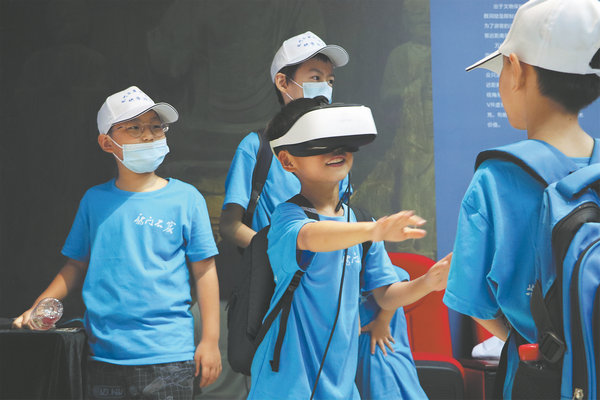
Students enjoy a virtual reality experience at Longmen Grottoes in Luoyang, Henan province. [Photo provided to China Daily]
Under professional guidance, visitors shape their own clay Buddha figures in art workshops and paint patterns from the grottoes' lotus-flower ceilings onto silk fans, brushstroke by brushstroke.
The programs at Longmen Grottoes are part of Luoyang's broader efforts to immerse visitors in a tangible experience of its history and culture hidden in its abundant museums and UNESCO World Heritage sites.
In late March in Beijing, Luoyang unveiled five study tours focused on archaeological exploration, Yellow River culture, and the preservation of intangible cultural heritage, aiming to appeal to travelers' cultural curiosity and enthusiasm.
"Beijing and Luoyang are both among the eight great ancient capitals of China," says Zhang Xu, an official from the Luoyang municipal bureau of culture, radio, television, and tourism.
Luoyang encourages travelers to explore the roots of Chinese civilization across the ruins of five ancient capital cities, explore 112 museums, and witness three UNESCO World Heritage sites.
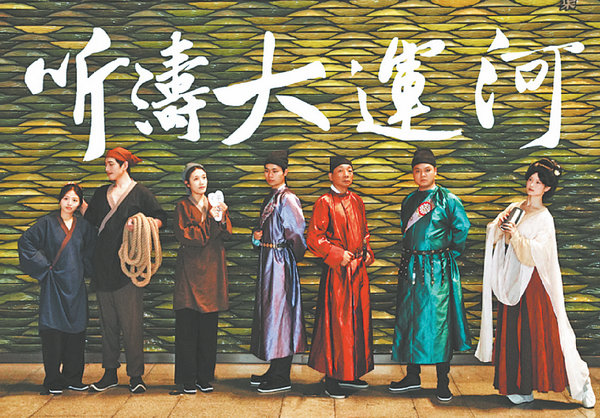
At the Sui-Tang Dynasties Grand Canal Cultural Museum, visitors become part of the waterway in an immersive theater program where they are cast as merchants or boatmen traveling the artificial waterway that once connected Beijing to Hangzhou, Zhejiang province. [Photo provided to China Daily]
"The city is a living museum of Chinese history," he notes.
Luoyang has established more than 100 study bases offering over 1,600 courses covering a wide range of topics, forming a comprehensive spectrum of information from the dawn of civilization to modern technology.
For the upcoming season, the city has prepared 900 tour routes tailored to meet the diverse needs of study travelers.
With multiple ancient emperors having paid homage here, the Longmen Grottoes have been systematically developing study tour activities since September 2021, transforming the weight of history into hands-on educational programs.
For adults, the site invites scholars to lead participants into the caves for on-site academic exchanges alongside its own experts, while senior guides provide up-close art appreciation. "Visitors find it unforgettable and immersive when they watch experts engage in live scholarly debate," Ma notes.
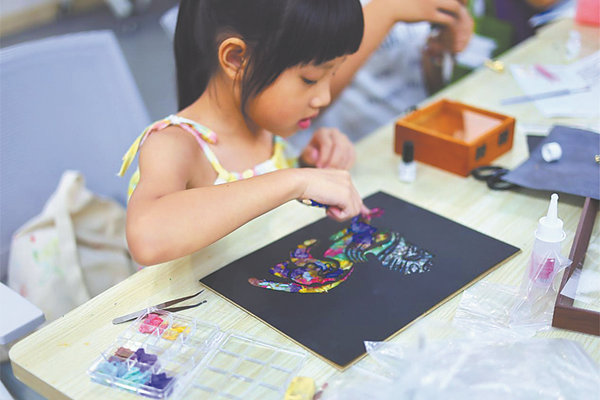
A girl engages in an art project during her visit to Luoyang Museum. [Photo provided to China Daily]
For younger students, experience and creation are emphasized. Thirteen original courses cover areas including technology and intangible cultural heritage. One particularly inventive program uses 3D-printing technology to create 1:1 replicas of relief carvings and inscribed stelae, allowing students to experience traditional rubbing techniques firsthand.
"As students brush and press, they capture the details of the Longmen Grottoes' content," he explains.
If the Longmen Grottoes are a brilliant jewel in Luoyang's historical crown, the city's museums form a three-dimensional narrative of "what makes China".
At the Erlitou Site Museum of the Xia Capital, visitors can explore the origins of Chinese civilization through more than 30 courses.
A course on the path of technological innovation in Xia Dynasty (c.21st century-16th century BC) handicrafts is offered for visitors to vicariously feel what it's like to be Xia artisans, as they try their hand at pottery, bronze casting, and turquoise inlay, recommends Yang Kexin, a representative from Luoyang's cultural and museum system.
"Visitors can gain an intuitive understanding of the innovative spirit that has been part of the Chinese nation since ancient times," Yang says.
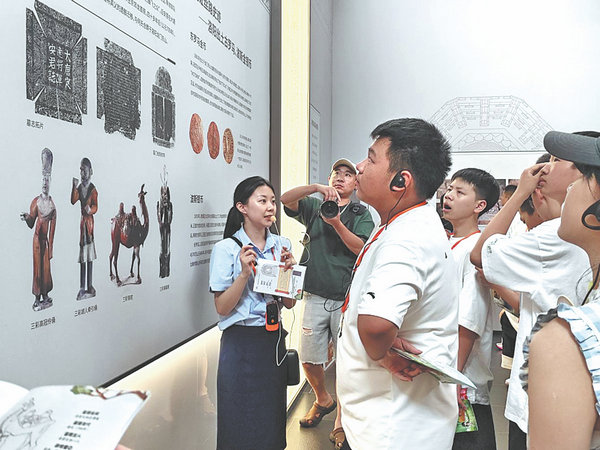
Visitors learn about history at the Han-Wei Luoyang Ancient City Site Museum, in which the displays bear witness to the exchange and mutual learning between Eastern and Western civilizations along the ancient Silk Road. [Photo provided to China Daily]
At the Luoyang Museum, the summer Little Museum Specialist series turns students into docents, restorers, cultural creative designers, and curators.
"Through immersive, task-driven activities, they evolve from visitors into inheritors," Yang explains.
For those interested in ancient mystic sacrificial rituals, the Luoyang Museum of Ancient Tombs takes them underground, with courses on murals and brick carvings that reveal ancient views on life and death.
The relatively new Han-Wei Luoyang Ancient City Site Museum, which opened last year, allows students to walk the Silk Road through a specially designed study guide that evokes a time when Luoyang was a Silk Road's eastern terminus.
It leads them through the museum's galleries with a series of tasks: locating artifacts that traveled from distant lands, including a Byzantine gold coin, Persian silverware and Western glassware; tracing trade routes on a map; and imagining the crowded streets of Tongtuo (copper camel) Street, the city's main boulevard, where foreign merchants once gathered.
Inside the museum, a digital exhibition brings that lost world into view. Developed by Harvard University's CAM Lab, the immersive installation uses holographic projection and 3D modeling to reconstruct the ancient capital. The museum also offers hands-on experiences beyond the screen. Participants can try their hand at simulated archaeological digs or piece together replica eave tiles.
Beyond these core venues, specialized museums offer their own experiences. At the Sui-Tang Dynasties Grand Canal Cultural Museum, visitors become part of the waterway in an immersive theater program where they are cast as merchants or boatmen traveling the artificial waterway that once connected Beijing to Hangzhou, Zhejiang province.
Visitors can also try their hand at Tang Dynasty (618-907) three-color glazed pottery at the Luoyang Sancai Art Museum, where skilled craftsmen guide them through the entire production process.
"A museum is a great school," Yang says, encouraging visitors to measure history with their footsteps in Luoyang.
For those who want to understand not just how China's civilization was shaped but how its modern industry was built, there is China YTO. Founded in 1955, this leading agricultural and construction machinery manufacturer exposes visitors to a grittier side of the city's story.
"Young people can understand the struggle and pride of an era among gears and steel," says Guo Yushi, from the company's Dongfanghong industrial tourism program.
Stories about the first female tractor driver in China and the major pioneers who built the industry from nothing will be shared. A bus tour then passes the well-preserved Soviet-style buildings before arriving at the advanced assembly line for large-wheel tractors, where one tractor rolls off every three minutes.
Thirty percent of China's tractors are produced here, and they have been exported to more than 150 countries, Guo notes.
Hands-on activities include a clay tractor workshop and a tractor assembly model class, she recommends.
Zhang Nan, a representative of Beijing's travel industry, observes that a rising number of students across the country have opted for study tours.
Experts attribute the trend to a shift in expectations, as parents and educators no longer want passive sightseeing; they seek destinations where young people can touch, make and ask.
"The universal feedback is that the destinations that truly move people are those that explain culture thoroughly and make the experience profound," Zhang Nan explains.
Luoyang has stood out as a top destination, she adds.
"Luoyang's history is not a cold display but a living scene in which you can participate," she says.

