
Hard to believe? Over 3,000 years ago, the the Shang Dynasty's royal families already had their own "wildlife zoos". During a conference on January 9 reviewing the archaeological achievements of 2025 in Central China's Henan province, researchers unveiled several small and medium-sized sacrificial pits containing bones and remains of various wild animals such as water buffalo, tigers, leopards and serows at the Yin Ruins Royal Cemetery in Anyang. These discoveries suggest that they may represent the earliest known instance of domesticated wild animal populations in China. The study has been published in the academic journal Archaeology.
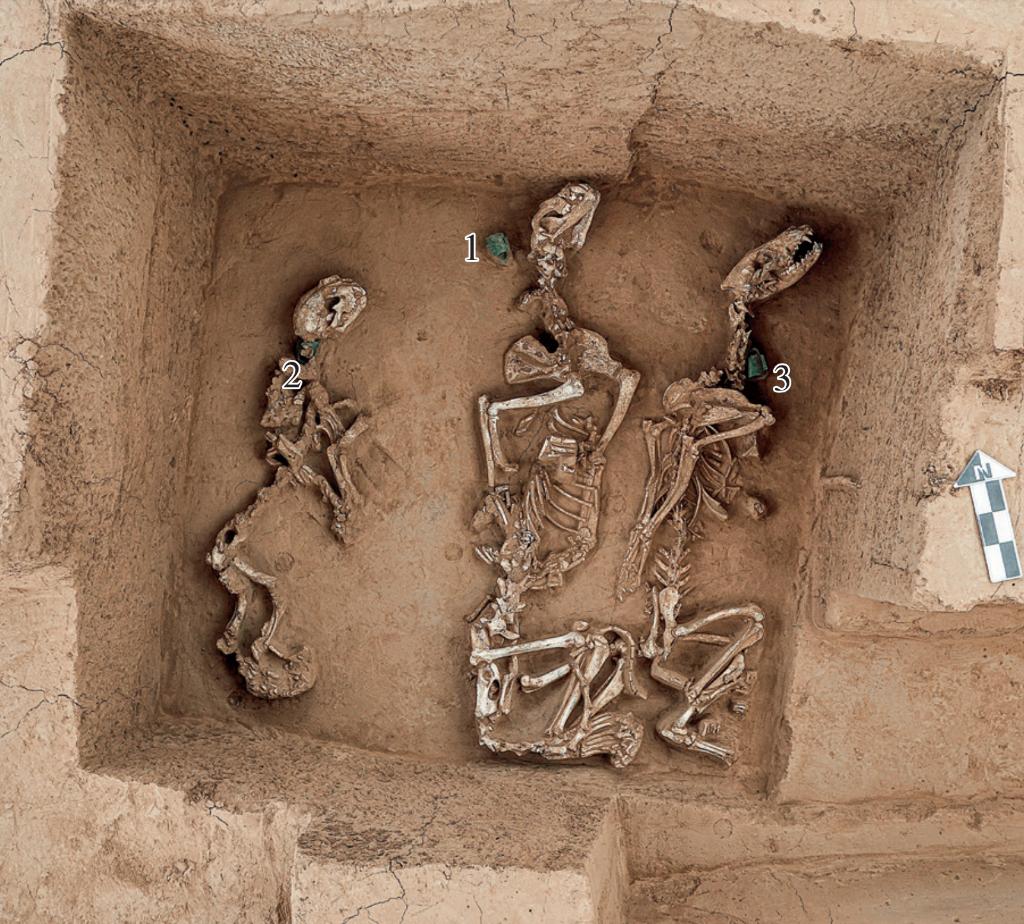
According to Li Xiaomeng, an assistant researcher at the Institute of Archaeology of the Chinese Academy of Social Sciences, 29 bronze bells were unearthed in 13 out of 19 small and medium-sized sacrificial pits uncovered during the latest archaeological excavation. Notably, traces of bronze bell were found around the necks of some wild animals. "The presence of these bells shows they were domesticated, meaning these wild animals weren't just captured by chance; they were intentionally bred and managed in royal gardens," said Li Xiaomeng.
The remains belong to a diverse range of species, including mammals such as water buffalo, deer, roe deer, wolves, tigers, leopards, foxes, serows, wild boars, and porcupines, as well as birds like swans, cranes, wild geese, falcons, and vultures. "The large number of remains and signs of organized management suggest that the Shang Dynasty had a well-established system for capturing, breeding, and managing wild animals,"said Niu Shishan, a researcher at the Institute of Archaeology of the Chinese Academy of Social Sciences. He added that multidisciplinary studies have further revealed the origins and breeding methods of these animals, highlighting the Shang Dynasty's strong capacity for resource control and a well-developed distribution network.
In addition to wild animals, archaeologists uncovered remains of humans, elephants, and horses in the large sacrificial pits. Horses were the most numerous, with each pit containing an even number of them. Some horse skulls had depressions of varying sizes on the top, providing insights into the Shang Dynasty's sacrificial livestock system. Niu noted that these sacrificial pits reveal the grandeur and complexity of Shang Dynasty sacrificial ceremonies and highlight its animal-based sacrificial practices, providing key evidence of the dynasty's religious beliefs and ceremonial system. (Chinese source: Henan Daily Reporter: Li Lin and Yang Zhitian Translator: Yang Jiaxin Proofreader: Ding Lan and Zhao Hanqing)

